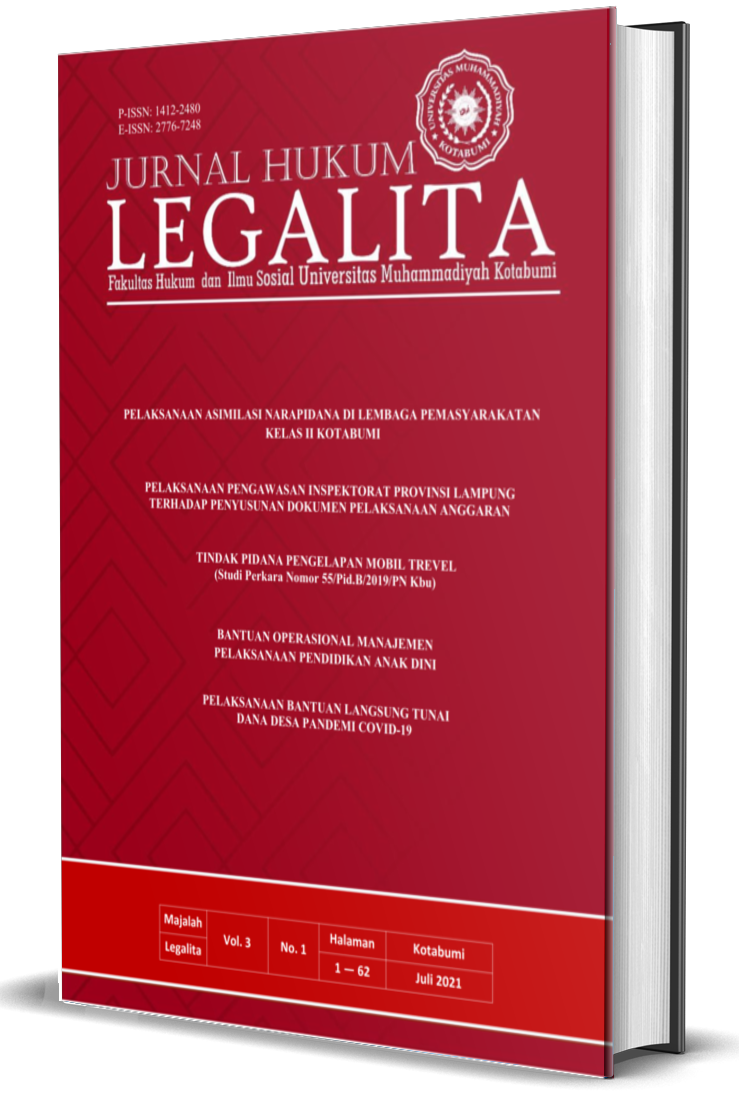

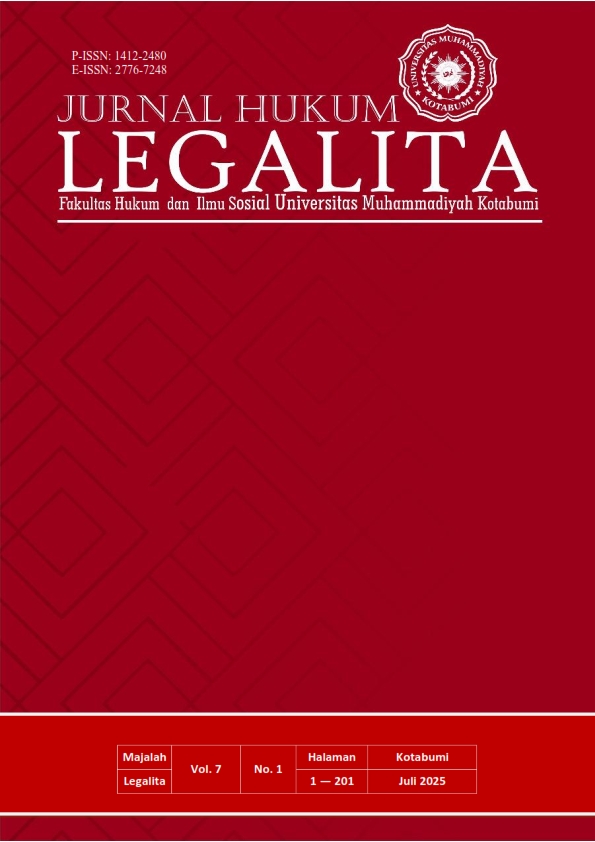
Jurnal Hukum Legalita (Legalita) (P-ISSN: 1412-2480 and E-ISSN: 2776-7248) is a journal that published since 2019 by the Department of Law in collaboration with LPPM, Muhammadiyah University Kotabumi. Legalita is intended to be the university’s journal for publishing articles reporting the results of the fields of criminal law, civil law, constitutional law, state administrative law, as well as discussing social phenomena that exist in society and building a culture of law awareness from the results of research.
In addition, Legalita also includes a lot of research on law in a broader sense. The journal is published regularly (in July and December), and approved and ready-to-publish manuscripts will also be regularly published ... Readmore

Articles
Penyelesaian Kepailitan Melalui Skema Restrukturisasi Utang Dalam Perspektif Omnibus Law (Kajian Terhadap Undang-Undang No. 6 Tahun 2023 Tentang Cipta Kerja)
 Google Scholar
 Garuda
 Sinta
SintaKejahatan Seksual Berbasis Digital: Tantangan Penegakan Hukum di Era Media Sosial
Efektifitas Penerpan UU Perkawinan Terhadap Perubahan Batas Usia Menikah Dini di Desa Sogilir Kabupaten Bolaang Mongondow Utara
Analisis Hukum Terkait Kebiasaan Perjodohan Suku Ta’a Dalam Perspektif Undang-Undang No 16 Tahun 2019 Pasal 7 Ayat 1
Peradilan Anak Dilihat Dalam Pandangan John Rawls
Mediasi Digital sebagai Upaya Perlindungan Konsumen dalam Sengketa E-Commerce: Antara Praktik dan Kekosongan Hukum di Indonesia
Penerapan Hukum Terhadap Pelaku Tindak Pidana Korupsi Dalam Penyalahgunaan Dana Bantuan Operasional Sekolah
Asas-asas Hukum Acara Mahkamah Konstitusi dan Implikasinya terhadap Kewenangan Uji Materi Undang-Undang
Peran Pertimbangan Hakim dalam Kasus Kepemilikan Senjata Tajam Oleh Anak
Analisis Yuridis Sebab Wakaf Tidak Dapat Dibatalkan Dalam Perspektif Putusan Pengadilan Agama
Fenomena No Viral No Justice Pada Proses Ganti Kerugian Korban Salah Tangkap (Studi Kasus Pada Perkara Mbah Omen dengan Nomor Perkara (1/Pid.Pra/2019/PN.Kbu) )
Kepastian Hukum Akta Otentik yang Dibuat oleh Notaris di Luar Wilayah Jabatannya
Perlindungan Hukum Bagi Masyarakat Atas Penggunaan Tanahnya Untuk Proyek Jalan Tol Demi Kepentingan Umum
Peran Perusahaan Hukum Terhadap Penerapan Pidana Kepada Korporasi Berdasarkan KUHP dan Peraturan Khusus
Efektivitas Upaya Komisi Pemilihan Umum Dalam Meningkatkan Partisipasi Politik Masyarakat Kota Gorontalo pada Pemilu 2024
Perlindungan Hukum Pemegang Hak Desain Industri Berbasis Artificial Intelligence di Indonesia Berdasarkan Undang-Undang Desain Industri
Upaya Hukum Terhadap Wanprestasi Dalam Perjanjian Kerja Sama Bisnis Pada Perusahaan Pertambangan
Perlindungan Hukum Korban Money Game Dengan Skema Piramida Dan Skema Ponzi Di Indonesia
Pemberian Bantuan Hukum terhadap Anak Korban Tindak Pidana Kekerasan Seksual Di Wilayah Hukum Polres Lampung Utara (Study Undang-Undang Nomor 11 Tahun 2012)
Sengketa Agraria di Era Investasi Asing: Tantangan Perlindungan Hak Masyarakat Adat
Indexer Sites