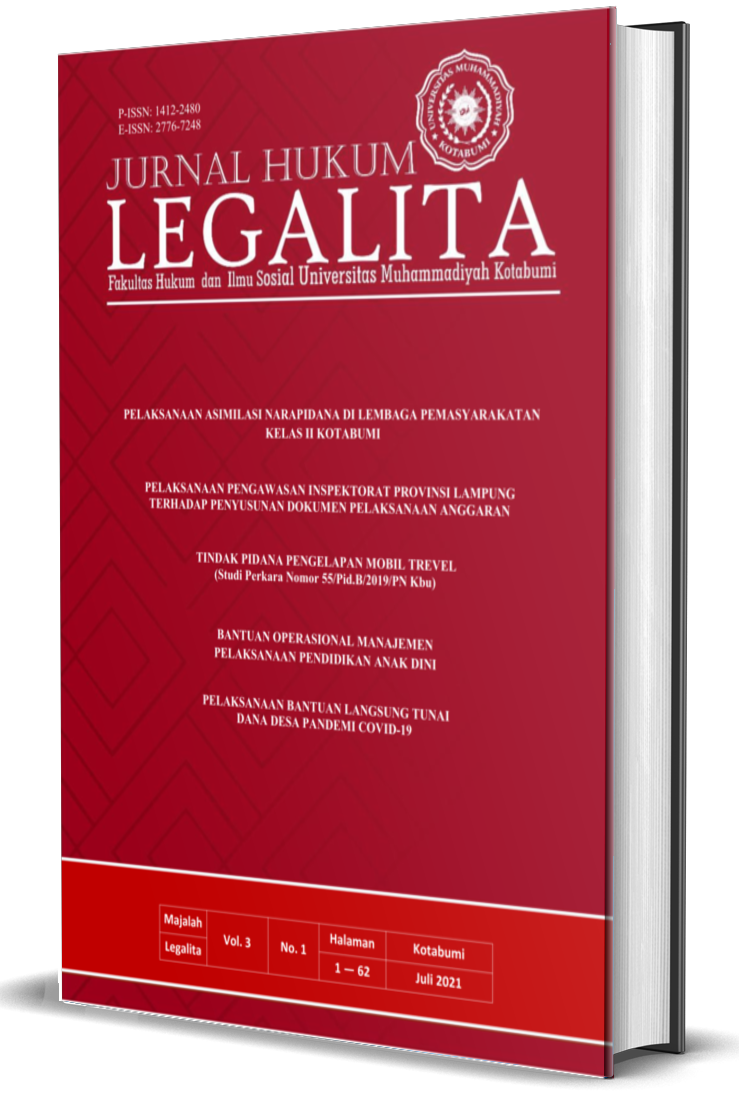

Open Access Statement
This Journal adopts the principle of open access for all of its published content, which means that every article published in the journal is freely available online to all users immediately upon publication. This policy is grounded in the belief that making research publicly accessible supports a wider and faster global exchange of knowledge. By offering open access, articles published in this journal can be accessed by a broad audience, including academics, researchers, practitioners, and the general public, without any cost or subscription barriers.
Benefits of Open Access for Authors
The open access model provides several significant advantages for authors who choose to publish their works in the Legalita Journal:
-
Free Access for All Users Worldwide
Open access ensures that articles published in the journal are available for free to anyone across the globe. This promotes quicker and broader dissemination of knowledge and research findings. It enables readers from various backgrounds and fields to benefit from the research, whether for educational, research, or general informational purposes. The absence of access barriers makes it easier for readers to discover, read, and cite the articles. -
Authors Retain Copyright Over Their Work
One of the key benefits for authors choosing open access is that they retain full copyright over their work. Authors maintain ownership of their intellectual property, giving them control over how their work is used, distributed, and managed. They are free to share, reuse, and even republish their work, which ensures that the intellectual property rights remain with the author while still making their research available to the global community. -
Increased Visibility and Readership
Open access increases the visibility of articles by making them freely accessible to a broader audience. As a result, the chances of the article being read, cited, and discussed are significantly higher compared to traditional subscription-based models. This visibility boosts the academic and professional recognition of the authors, enhancing their reputation and the potential for future collaborations and networking opportunities. Articles with higher readership also tend to receive more citations, which can further amplify their academic impact. -
Rapid Publication
Open access often facilitates faster publication, as articles are published digitally without the need for print production delays. Authors do not have to wait for an issue to be printed and distributed, allowing for quicker sharing of new findings with the academic community. This rapid publication helps authors disseminate their research in a timely manner, which is particularly valuable in fast-moving fields. -
No Spatial Constraints
Unlike traditional print journals, which may have limited space in each issue, open access digital journals are not bound by physical page limitations. This means that authors can publish longer or more detailed articles, including supplementary data or materials, without concern about exceeding page limits. This flexibility ensures that the research is presented in its complete form without compromise.
Creative Commons Attribution-NonCommercial 4.0 International License (CC-BY-NC 4.0)
All works published in the Legalita Journal are licensed under the Creative Commons Attribution-NonCommercial 4.0 International License (CC-BY-NC 4.0). This license allows users to share, copy, and distribute the published work with the following conditions:
-
Attribution (BY): Users must provide proper attribution to the original authors and source, linking to the original article and indicating any changes made. This ensures that authors receive the recognition they deserve for their intellectual contributions.
-
Non-Commercial (NC): Users are not allowed to use the work for commercial purposes. The work can only be used for educational, research, or other non-commercial purposes. This protects the authors' and journal's interests, ensuring that their work is not exploited for financial gain.
This Creative Commons license allows authors to protect their work while still enabling others to access and use it freely within the constraints of the non-commercial condition. It ensures that the research is available for educational and academic use, helping to foster further innovation and development in the field.
Conclusion
By embracing open access and the Creative Commons Attribution-NonCommercial 4.0 International License (CC-BY-NC 4.0), the Legalita Journal is committed to promoting the widespread dissemination of knowledge and supporting authors in making their research accessible to a global audience. This system offers significant benefits to authors, including intellectual property protection, increased visibility, quicker publication times, and a broader impact on the academic and global community. Open access, therefore, plays a vital role in accelerating academic exchange, enhancing research impact, and contributing to the advancement of knowledge.